How to Run Payroll in India: A Step-by-Step Guide for Small Businesses
Quick answer: to run payroll in India, set up salary structures and statutory registrations once. Then repeat a monthly cycle: lock attendance and leave, calculate gross pay, deduct employee PF, ESI, professional tax and TDS, pay salaries, issue payslips, and deposit statutory dues on time. This guide shows how to run payroll in India with a calendar you can copy.
Most small businesses run their first payrolls on a spreadsheet with help from a CA. That works for a few people. As headcount grows, missed deadlines and mismatched numbers become the real cost. A repeatable process fixes both.
One-time setup before your first payroll
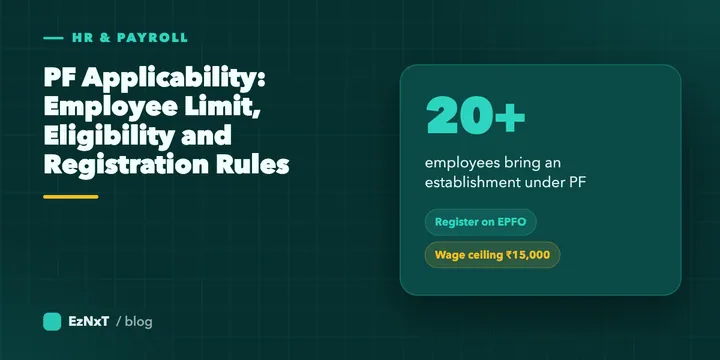
- Registrations: TAN for deducting TDS; PF once you reach 20 employees (PF applicability); ESI from 10 employees in notified areas (ESI applicability); professional tax registration in states that levy it; and the state Shops and Establishments registration.
- Salary structures: basic, HRA and allowances for each role. Keep wages (basic + DA) at about half of total pay under the Labour Codes’ 50% wage rule.
- Employee master data: PAN, bank account, UAN, ESI number, date of joining, tax regime choice and declarations for investments.
- Policies: pay date, attendance cut-off, leave rules and overtime. See our attendance policy template and leave policy guide.
How to run payroll in India every month
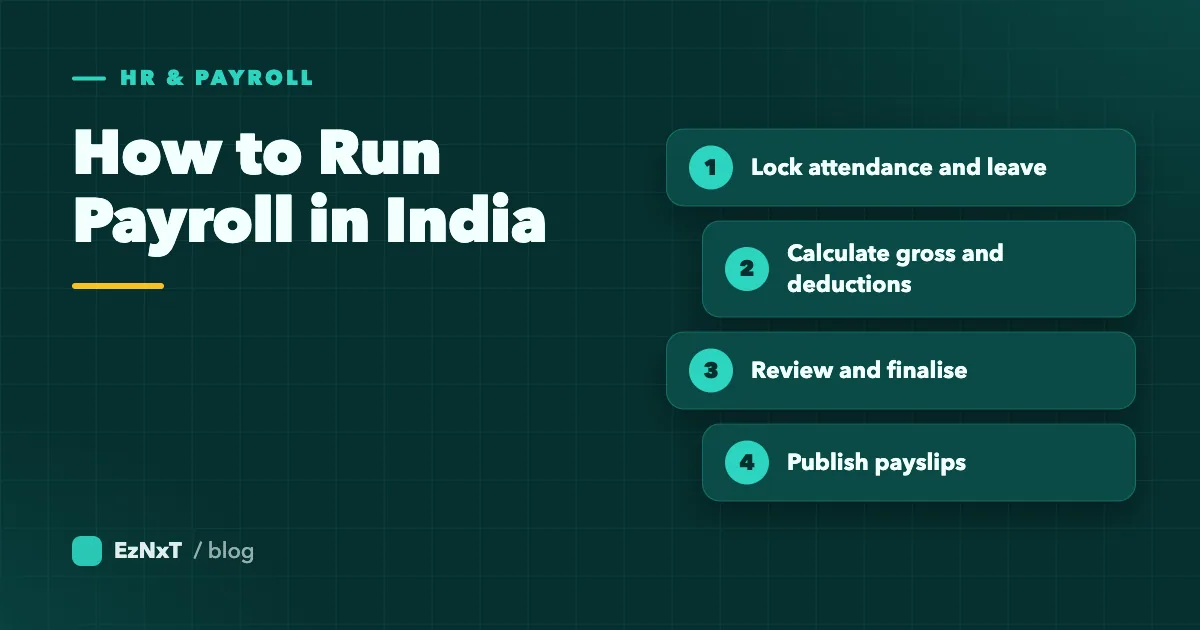
- Lock attendance and leave on a fixed cut-off date (for example the 25th). Late joiners, exits and unpaid leave change pay days.
- Calculate gross pay for the paid days, plus overtime, arrears, incentives and reimbursements.
- Apply deductions: employee PF (12% of PF wages, see how PF is calculated), employee ESI (0.75% if covered), professional tax as per state slabs, and TDS based on projected annual income and the chosen tax regime.
- Review and approve a payroll register: compare totals with last month and explain every large change.
- Pay salaries through a bank bulk transfer on the pay date.
- Issue payslips showing gross, each deduction and net pay. Our salary slip generator shows the standard format.
- Deposit statutory dues and book the entries in your accounts.
Monthly payroll compliance calendar
| When | What |
|---|---|
| By the 7th of next month | Deposit TDS deducted from salaries (for March, by 30 April) |
| By the 15th of next month | PF contributions and ECR filing on the EPFO portal |
| By the 15th of next month | ESI contributions on the ESIC portal |
| As per state rules | Professional tax payment and returns |
| Quarterly | TDS return on salaries |
| Yearly | Annual TDS certificate (Form 16) to each employee |
India’s new Income-tax Act, 2025 applies from 1 April 2026, and some return and certificate forms are renumbered under it. Confirm the current forms with your CA or on the Income Tax Department’s website.
A simple payroll checklist
- New joiners added with bank, PAN and UAN before the cut-off
- Exits marked, with full and final settlement scheduled (the Code on Wages requires payment within two working days in specified cases)
- Unpaid leave and overtime approved in the attendance system, not over chat
- Payroll register reviewed by a second person
- Challans saved for PF, ESI, TDS and professional tax
- Payslips shared and salary journal posted to accounts
When to move payroll off spreadsheets
The tipping point is usually around 15 to 25 employees: enough people that attendance, leave and statutory deductions no longer fit in one person’s head. Payroll software keeps one employee record from hiring to exit and recalculates deductions when salaries change. EzNxT links attendance, leave and payroll on one login.
Frequently Asked Questions
How often is payroll run in India?
Almost always monthly. Salary is usually paid on the last working day of the month or within the first week of the next month.
What are the statutory deductions in Indian payroll?
Employee PF, employee ESI (if covered), professional tax (in states that levy it) and TDS on salary. Labour Welfare Fund also applies in some states.
Can a small business run payroll without software?
Yes, for a handful of employees, with a spreadsheet and a CA’s help. As headcount and deductions grow, software reduces errors and keeps payslips, challans and records together.
What is the due date for depositing TDS on salary?
TDS deducted in a month is deposited by the 7th of the following month, except for March, when the due date is 30 April.
Does EzNxT file PF, ESI and TDS returns?
EzNxT calculates deductions, generates payslips and keeps payroll data ready for filing. Statutory filing on the EPFO, ESIC and income-tax portals is done by you or your CA.
See EzNxT payroll software for India, or read how to calculate in-hand salary from CTC.