How to Hire Without an HR Team: A Practical Playbook for Founders
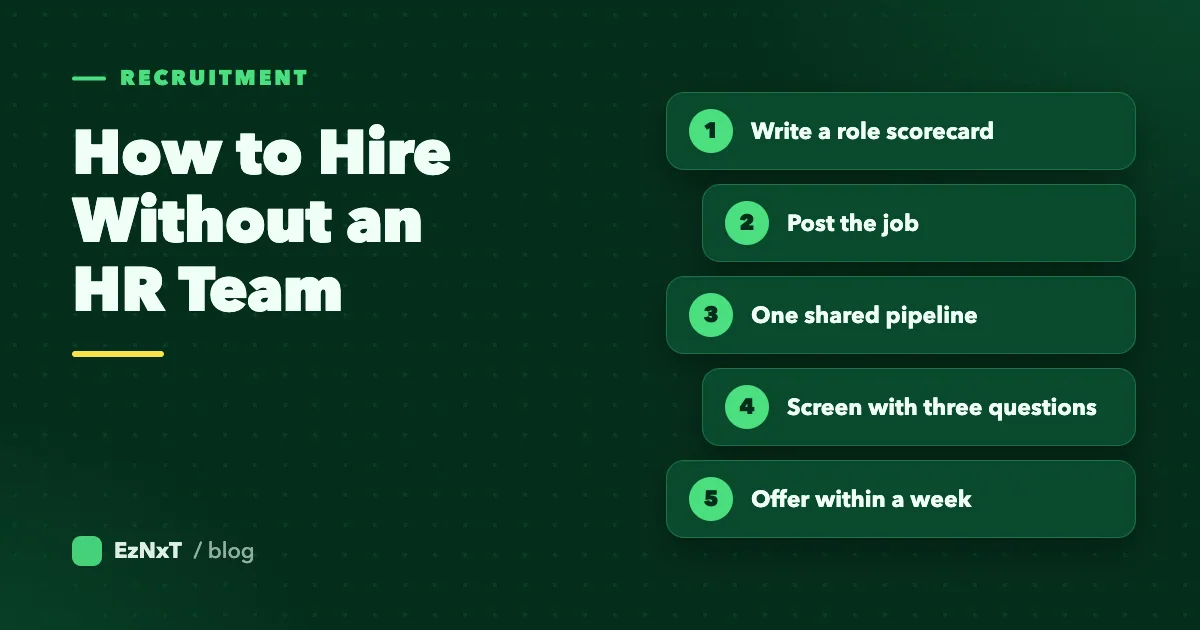
Quick answer: you can hire without an HR team if you make five things repeatable: a one-page role scorecard, a job post on your careers page and job boards, one shared candidate pipeline, a structured interview with the same questions for every candidate, and a standard offer letter. With that in place, a founder or team lead can run a hire in a few hours a week.
Most startups make their first 10 to 20 hires before anyone has “HR” in their title. The risk is not the lack of an HR person. It is hiring through scattered WhatsApp messages, inbox threads and gut feel. Here is a process small teams can actually keep up.
Step 1: write a role scorecard before the job post
On one page, write what this person must achieve in their first 90 days, the three to five skills that matter most, and the deal-breakers. Every later step, including screening questions, interview questions and the final decision, comes from this scorecard.
Step 2: post the job where candidates will see it
- Your careers page: the place you send every candidate, link from LinkedIn and your website.
- Job boards: post once and distribute to multiple boards instead of re-typing the same job.
- Referrals: ask your team and network; for small companies they are often the fastest source.
Keep the job post honest: salary range, location or remote policy, and the interview process. It saves everyone time.
Step 3: keep every candidate in one pipeline
The biggest time sink when you hire without an HR team is losing track of who is at which stage. Use fixed stages (Applied → Screened → Interview → Final round → Offer → Hired) and move every candidate through the same board, so anyone on the team can see the status. An applicant tracking system does this and keeps resumes, notes and feedback with each candidate.
Step 4: screen fast with three questions
Add two or three screening questions tied to the scorecard (for example, “Have you handled GST invoicing for more than 50 clients?”). Review applications in one 30-minute block per day instead of throughout the day, and reply to every candidate within three working days.
Step 5: run structured interviews
| Round | Who | Length | Purpose |
|---|---|---|---|
| Screening call | Hiring manager | 20 minutes | Motivation, salary expectation, notice period |
| Skills round | Team member | 45–60 minutes | Practical task or case from real work |
| Final round | Founder | 30–45 minutes | Values, ownership, questions from the candidate |
Ask every candidate the same core questions and score each answer from 1 to 4 against the scorecard right after the interview. Scores written later are mostly memory.
Step 6: decide and send the offer within a week
Good candidates in India often hold two or three offers. Decide within a week of the final round, share the salary breakup (gross, deductions and in-hand pay, see in-hand salary from CTC) and send a clear offer letter. EzNxT’s free offer letter generator and appointment letter generator give you standard formats.
Step 7: onboard on day one
Collect PAN, bank, UAN and emergency details before the start date, set up accounts and share the first-week plan. When the ATS and HRMS share one record, the new hire’s details move across without re-typing. Read what native ATS–payroll integration means.
A weekly time budget for founders who hire without an HR team
- Role scorecard and job post: 1 hour, once
- Screening: 30 minutes a day, 4 days a week
- Interviews: 3 to 4 hours a week while the role is open
- Decision, offer and onboarding prep: 1 to 2 hours
Frequently Asked Questions
Can a startup hire without an HR team?
Yes. Most startups make their first hires without HR. A written scorecard, a shared pipeline and structured interviews let founders and team leads hire consistently.
When should a startup hire its first HR person?
Many companies add a dedicated HR or people-operations role at around 25 to 50 employees, when hiring volume, payroll and compliance need someone’s full attention.
How many interview rounds should a small company have?
Two or three rounds are usually enough: a short screening call, a practical skills round and a final conversation with the founder or manager.
Do I need an applicant tracking system for a few hires?
For one or two hires a year, a spreadsheet can work. Once several people review candidates or you hire every month, an ATS saves time and stops candidates slipping through.
Is there a free ATS for small businesses in India?
Yes. EzNxT ATS is free for up to 10 users and includes a careers page, job posting, pipelines and interview stages. See free ATS software for India.
Growing a recruitment process? See recruitment management software.