GST Return Filing Guide India: Step-by-Step for Small Businesses (2026)
GST return filing is one of those jobs every registered business has to get right, every single month, whether or not anything interesting happened. Miss a date and the late fees and interest start adding up quietly in the background.
This guide explains GST return filing in plain language for small business owners in India: which returns you file, when they’re due, what goes into them, and how to prepare your data so your CA can file quickly. Rules and due dates do change, so always confirm the latest position on the official GST portal or with your CA.
Who Needs to File GST Returns?
Every business registered under GST has to file returns, even in a month with no sales at all.
- Regular taxpayers file GSTR-1 and GSTR-3B, monthly or quarterly depending on turnover and scheme.
- Composition scheme dealers follow a different cycle and file GSTR-4 annually.
- Businesses with no transactions still have to file a nil return.
Late filing leads to late fees and interest, and repeated non-filing can block your buyers from claiming input tax credit on your invoices, which is a quick way to lose customers.
Types of GST Returns for Small Businesses
| Return | Who files | Frequency | Due date |
|---|---|---|---|
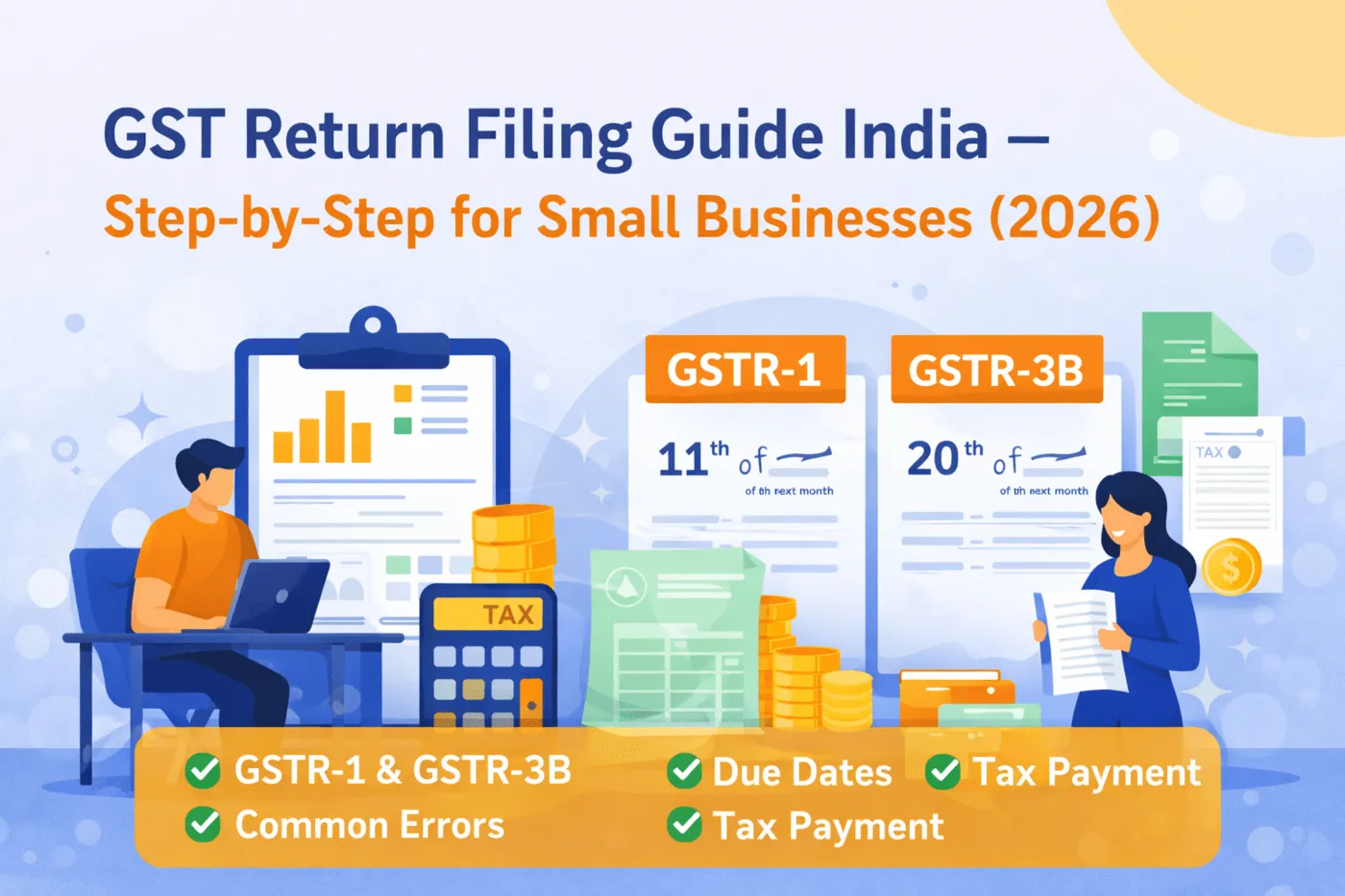
| GSTR-1 | Regular taxpayers | Monthly | 11th of the next month |
| GSTR-1 (QRMP) | Turnover up to ₹5 crore, opted for QRMP | Quarterly | 13th after the quarter |
| GSTR-3B | All regular taxpayers | Monthly (quarterly under QRMP) | 20th of the next month (staggered dates under QRMP) |
| GSTR-4 | Composition dealers | Annually | 30 April |
| GSTR-9 | Annual return | Annually | 31 December |
What Is GSTR-1?
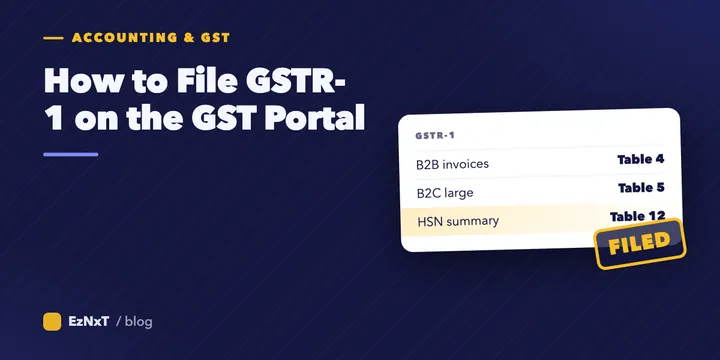
GSTR-1 is the return where you report your outward supplies, meaning the sales invoices you issued. It typically includes:
- B2B invoices, with each buyer’s GSTIN
- Large B2C inter-state invoices above the current threshold
- Credit and debit notes
- Export invoices
Your buyers see these invoices in their GSTR-2B and use them to claim input tax credit. That’s why a wrong GSTIN or a missed invoice on your side becomes a problem for your customer too. If your invoices aren’t consistent yet, start with our guide on how to create a GST invoice.
What Is GSTR-3B?
GSTR-3B is a summary return. It reports your total sales, the input tax credit you’re claiming and the net GST payable. The tax has to be paid when you file it.
- Interest on late payment: 18% per year
- Late fee: ₹50 per day (₹20 per day for nil returns), subject to caps
Step-by-Step GST Return Filing Process
Most small businesses follow the same monthly routine for GST return filing:
- Collect every sales invoice issued during the period.
- Collect purchase invoices for input tax credit.
- Reconcile both against your bank statement.
- Check your purchases against the auto-generated GSTR-2B.
- Prepare the GSTR-1 and GSTR-3B summaries.
- Your CA reviews the figures and files the returns on the GST portal.
The slowest step is almost always the first one: chasing invoices that live in different places. Businesses that raise every invoice from one system usually finish this routine in an afternoon instead of a week.
How EzNxT Helps You Prepare GST Data
Preparing GST data by hand from spreadsheets takes time and invites mistakes. EzNxT’s GST invoicing software and accounting module keep the data clean from the start.
With EzNxT you can:
- Generate GSTR-1 ready reports from your invoices
- Calculate GST correctly on every invoice
- Keep HSN and SAC codes consistent across products and services
- Export GST reports for your CA in one click
Because invoicing sits next to the CRM, a closed deal turns into a correct invoice without anyone re-typing the customer’s GSTIN. See how that connects to sales in our guide to tracking sales leads in a small business.
Common GST Filing Mistakes Small Businesses Make
- Missing the GSTR-1 or GSTR-3B due date
- Claiming input tax credit that doesn’t appear in GSTR-2B
- Entering the wrong GSTIN on invoices
- Not reconciling GSTR-2B with purchase records every month
- Mixing personal and business expenses
Almost all of these come from scattered records rather than bad intent. A single source for invoices and purchases fixes most of them. If you’re still choosing tools, our list of the best free business software for small businesses in India compares GST-ready options.
Related reading: how to file GSTR-1, CGST vs SGST vs IGST, e-invoicing applicability.
Frequently Asked Questions
What is the due date for GSTR-1?
For monthly filers, GSTR-1 is due by the 11th of the following month. QRMP filers file quarterly by the 13th of the month after the quarter.
What is the due date for GSTR-3B?
Monthly GSTR-3B is usually due by the 20th of the following month. QRMP taxpayers have staggered quarterly dates depending on their state.
Do I need to file GST returns with zero transactions?
Yes. You must file a nil return even if you had no sales or purchases in the period. Nil returns can usually be filed quickly on the portal or by SMS.
Can I do GST return filing myself without a CA?
You can, using the GST portal, but most small businesses prefer a CA to file while they focus on keeping invoices and purchase records clean and ready.